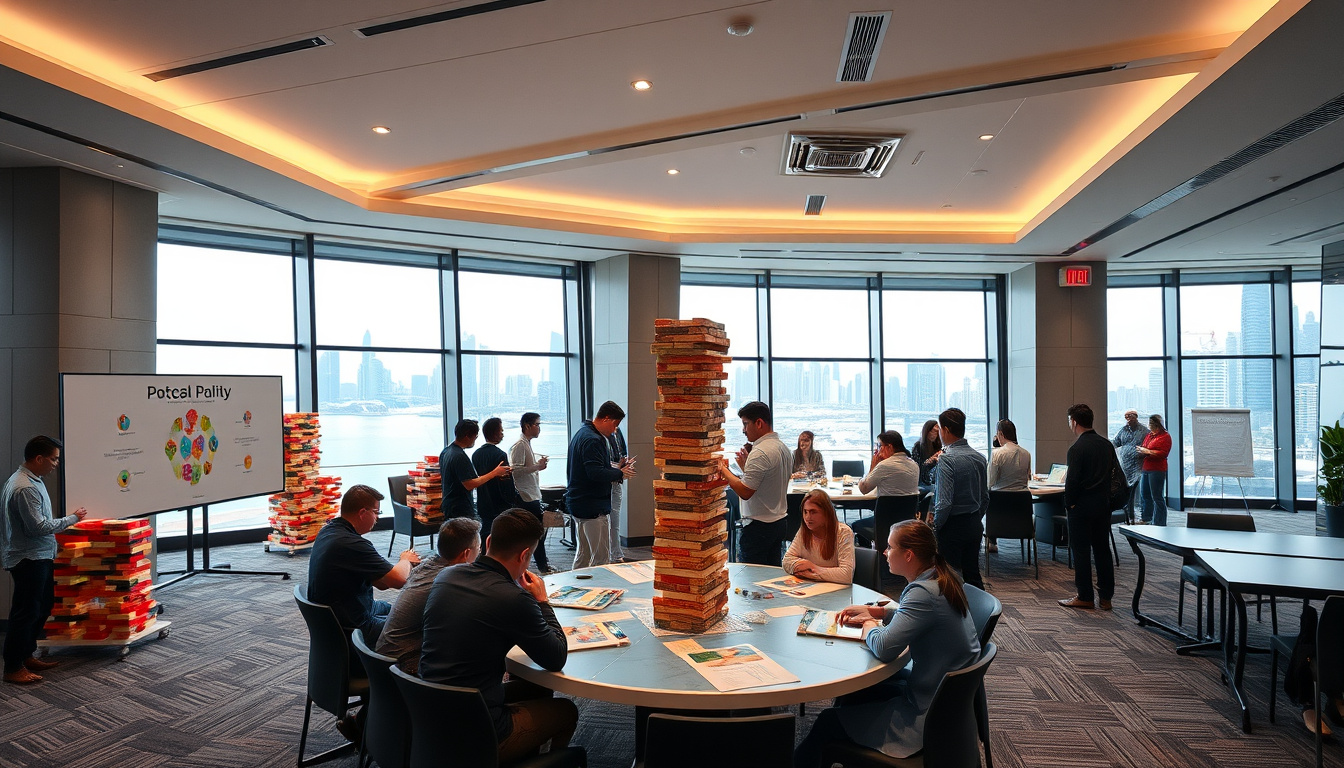
Singapore’s humid tropical climate and frequent rainfall have made indoor team building activities an essential consideration for corporate event planners. Venues across the city-state offer air-conditioned spaces that eliminate weather uncertainty while delivering the same collaborative benefits as outdoor alternatives. From escape rooms in Bugis to art studios and hotel ballrooms, organizations increasingly recognize these controlled environments as reliable options for fostering team cohesion year-round.
The indoor format appeals particularly to companies seeking predictable scheduling, accessibility for all fitness levels, and seamless technology integration. With dedicated providers operating across multiple districts and scalable formats accommodating anywhere from five to five hundred participants, the options have grown substantially over recent years. This guide examines the current landscape of indoor team building activities available across Singapore, including practical considerations for venues, costs, and group-specific customization.
What Are the Best Indoor Team Building Activities in Singapore?
Several activity categories dominate the indoor team building market, each offering distinct advantages depending on organizational goals and participant profiles. The following overview highlights the most sought-after options currently available through established providers.
This comparison summarizes four leading activity types, helping planners quickly identify options that align with their team’s size, duration preferences, and development objectives.
- Prioritize escape rooms for problem-solving development. These locked-room puzzles require communication, delegation, and logical reasoning under time pressure.
- Consider laser tag for high-energy teams. Physical activity in a competitive format builds camaraderie while releasing pent-up energy.
- Choose creative workshops for relaxed bonding. Art jamming, pottery, and similar activities allow personality expression without performance pressure.
- Add VR experiences for tech-forward organizations. Virtual reality challenges appeal particularly to innovation-driven companies and younger workforces.
- Rotate activity stations for large gatherings. Mixing formats keeps engagement high when hosting groups exceeding fifty participants.
- Book virtual options for distributed teams. Remote collaboration remains possible through guided online sessions with materials delivered in advance.
| Activity | Group Size | Duration | Key Benefit |
|---|---|---|---|
| Escape Rooms | 6–100 pax | 1.5–2.5 hrs | Problem-solving, communication |
| Laser Tag / Archery Tag | 20–300 pax | 1.5–2.5 hrs | Competition, energy |
| Art Jamming / Pottery | 10–100 pax | 1.5–3 hrs | Creativity, relaxation |
| VR Experiences | 10–60 pax | 1.5–4 hrs | Innovation, technology engagement |
Escape rooms have established themselves as the most popular choice, accounting for approximately 45 percent of bookings according to industry data. Providers like The Escape Artist operate multiple outlets across Singapore, offering themed rooms that challenge participants in different ways. Xcape Singapore, located on Rochor Road in Bugis, represents another major operator with extensive team building packages.
Where Can I Find Top Indoor Team Building Venues in Singapore?
Dedicated Activity Centers
Singapore’s dedicated team building venues fall into two primary categories. The first comprises specialized activity centers designed specifically for group events. These include escape room chains with multiple themed rooms, laser tag arenas, and art studios equipped for group workshops. The Escape Artist operates several outlets offering turnkey experiences complete with facilitators. Xcape Singapore’s Bugis location provides additional escape room capacity alongside event management support.
Art studios such as Artist Ra Studio have expanded their offerings beyond traditional art jamming to include terrarium making, candle crafting, and pottery sessions. These venues typically accommodate between ten and one hundred participants and often provide virtual options through Zoom for remote teams.
Flexible Event Spaces
The second category encompasses flexible spaces that providers transform for team building purposes. Hotel ballrooms represent the most common choice for large-scale events, with properties across Marina Bay, Orchard Road, and the CBD offering turnkey solutions. Singapore’s MICE infrastructure supports events ranging from intimate board meetings to conferences exceeding one thousand attendees.
Convention centers including Suntec Singapore and Marina Bay Sands provide column-free spaces suitable for activities requiring movement. Providers like Get Out! Events frequently deploy mobile laser tag equipment in these venues, creating temporary arenas within existing event spaces. This flexibility allows organizations to host team building during broader corporate gatherings without additional venue costs.
Indoor Escape Rooms for Team Building
Escape rooms deserve special mention within the venue landscape due to their specificity. These self-contained environments offer predetermined challenge structures, making them predictable choices for planners seeking minimal logistical complexity. Rooms at venues like Laser Tag Singapore can accommodate groups from six to over one hundred participants through sequential booking or scaled challenge formats.
When evaluating dedicated venues, confirm whether the provider includes facilitation, equipment, and cleanup within quoted pricing. Hidden charges for setup time or minimum food and beverage commitments can substantially affect final costs.
How Much Do Indoor Team Building Activities Cost in Singapore?
Pricing for indoor team building activities in Singapore varies considerably based on activity type, group size, duration, and included services. Understanding the typical ranges helps organizations budget accurately and compare proposals effectively.
Activity-Specific Pricing Ranges
Base pricing starts at approximately $28 per person for basic escape room sessions, making these accessible for organizations with limited budgets. Trivia and board game show formats fall in the $30 to $60 range per participant, offering cost-effective options for large gatherings. Mid-tier activities including escape room packages, art jamming sessions, and cooking challenges typically cost between $50 and $100 per person.
Premium experiences such as virtual reality challenges and customized corporate programs can reach $150 per participant or higher. These higher price points generally reflect specialized equipment, extended facilitation time, and bespoke content development. According to Get Out! Events, comprehensive packages including venue hire and catering can range from $50 to $180 per person depending on scale and customization level.
Factors Affecting Final Costs
Several variables influence total expenditure beyond the base activity rate. Duration extensions typically incur additional per-hour charges. Custom theming, branded materials, and corporate branding overlays add production costs. On-site photography, video documentation, and post-event analytics packages represent optional add-ons many providers offer.
Group size creates complex pricing dynamics. While per-person rates often decrease as numbers increase, minimum spend requirements may apply for smaller groups to cover venue and facilitator costs. Large groups hosting events at convention centers should budget for room rental, security, and potentially catering minimums that hotels and venues impose.
| Price Category | Per-Person Range (SGD) | Typical Activities |
|---|---|---|
| Budget | $28–$40 | Basic escape rooms, laser maze |
| Mid-Range | $40–$100 | Art jamming, cooking challenges, laser tag |
| Premium | $100–$150 | VR experiences, Lego Serious Play |
| Fully Bundled | $50–$180 | Custom programs with venue, catering |
Indoor activities generally offer greater cost stability compared to outdoor alternatives, with indoor options ranging from $30 to $150 per person versus outdoor events spanning $40 to $180. However, prices fluctuate based on booking timing, peak season surcharges, and provider-specific factors.
What Indoor Team Building Ideas Suit Different Group Sizes?
Small Group Options (5–50 Participants)
Intimate team building works well with focused activities that maximize interaction density. Escape rooms excel in this context, as smaller groups can assign specific roles and communicate more effectively. Individual workstations at pottery or painting studios allow meaningful one-on-one conversations that larger settings preclude.
Virtual reality experiences also suit small groups particularly well, with bomb defusal scenarios and collaborative puzzles creating shared experiences that build rapport. Pixel Party SG offers VR formats designed for teams of ten to sixty participants, with facilitators guiding groups through problem-solving narratives.
Large Group Solutions (50–500+ Participants)
Scaling team building for major corporate events requires different approaches. Trivia competitions and board game shows accommodate up to five hundred participants simultaneously, making them efficient choices for company-wide gatherings. The format requires minimal movement while maintaining competitive engagement across large audiences.
Indoor Amazing Race formats allow organizers to split large groups into rotating stations, ensuring everyone participates actively. This approach combines multiple activity types—laser tag, art jamming, puzzle stations—within a structured event flow. Providers typically deploy multiple facilitators to manage concurrent streams, keeping queues manageable and energy levels high.
Hybrid and Virtual Formats
Remote and hybrid teams present unique challenges that Singapore providers have addressed through virtual offerings. Virtual escape rooms run for sixty to ninety minutes, requiring only internet-connected devices and video conferencing access. Participants can join from different locations while solving interconnected puzzles collaboratively.
Art supply delivery programs enable remote creativity sessions where facilitators guide participants through Zoom tutorials. Providers ship materials in advance, ensuring everyone has identical supplies for painting, terrarium building, or candle making. This approach maintains the tactile satisfaction of hands-on activities while accommodating geographic distribution.
Rainy Day Planning
Singapore’s rainfall patterns make indoor alternatives valuable throughout the year. All air-conditioned venues eliminate weather risk entirely, removing the anxiety of monitoring forecasts or preparing backup plans. This reliability appeals particularly to event planners responsible for corporate calendars where timing precision matters.
Physical inclusivity represents another advantage of indoor settings. Participants with mobility limitations, health conditions, or lower fitness levels can engage fully without concern about terrain, heat exposure, or distance walking. This consideration matters increasingly as organizations prioritize diversity and inclusion in employee programs.
What Information Remains Established Versus Uncertain?
Transparency about information quality supports accurate planning. Several aspects of indoor team building are well-documented, while others require direct confirmation with providers.
| Established Information | Information Requiring Confirmation |
|---|---|
| Activity types widely available across Singapore | Real-time availability for specific dates |
| Price ranges reflecting market rates | Final quotes for custom programs |
| Group size capabilities per venue | Current venue condition and capacity limits |
| Provider credibility based on market presence | Facilitator quality and experience level |
| General venue locations and districts | Specific access arrangements and parking |
Prices cited throughout this guide reflect 2024–2025 estimates. Organizations should request written quotes directly from providers to confirm current rates before committing budgets or scheduling events.
Why Does Singapore’s Context Favor Indoor Team Building?
Singapore’s position as a regional MICE hub creates structural demand for reliable event options. The city-state hosts numerous international conferences, exhibitions, and corporate gatherings annually, establishing infrastructure that supports team building activities alongside larger events. This existing ecosystem means providers compete on quality and innovation, benefiting organizations seeking professional services.
The tropical climate reinforces indoor preferences through practical necessity. Monsoon seasons bring predictable rainfall periods, while year-round humidity makes outdoor activities physically demanding. Air-conditioned venues offer consistent comfort that outdoor settings cannot guarantee, supporting more effective participation throughout sessions.
Singapore’s compact geography allows organizations to access diverse venue options without extensive travel. A team can transition from escape rooms in Bugis to a hotel ballroom in Marina Bay within thirty minutes, enabling multi-activity programs that combine different experiences within single events. This accessibility supports creative programming that would require significantly more logistics in larger markets.
What Do Experts Recommend for Indoor Team Building Success?
Industry professionals emphasize several factors when advising organizations on indoor team building selection. Alignment with developmental objectives ranks highest among recommendations. Activities should connect to specific outcomes—improved communication, creative problem-solving, cross-functional collaboration—rather than serving purely recreational purposes.
Successful team building integrates with broader organizational goals. When activities connect to real work challenges, participants transfer insights more effectively to their daily responsibilities.
Facilitation quality significantly influences outcomes. Providers offering experienced facilitators who can debrief sessions, draw connections to workplace dynamics, and guide reflection processes add substantial value beyond simply operating activities. Organizations should evaluate facilitation credentials and sample debrief methodologies when comparing providers.
Physical comfort during activities directly affects engagement levels. Air-conditioned spaces with appropriate break areas maintain energy throughout extended programs, preventing the fatigue that undermines learning retention.
How to Plan Your Indoor Team Building Approach
Organizations approaching indoor team building should begin by clarifying objectives, group characteristics, and logistical constraints. Budget parameters, participant demographics, and scheduling flexibility shape viable options significantly. Early engagement with providers allows customization discussions that address specific organizational needs.
Combining indoor activities with other event components—conferences, product launches, annual gatherings—often delivers superior value. The Affordable Art Fair Singapore guide illustrates how Singapore’s event calendar offers numerous opportunities for integrating team activities with cultural programming. Similarly, corporate venues hosting multiple functions can layer team building between formal sessions efficiently.
Documentation and follow-up cement learning from team building experiences. Providers offering photography, video highlights, and written summaries support post-event communication that reinforces connections made during activities. These materials also serve organizational memory purposes, documenting team dynamics and participation for future planning reference.
Frequently Asked Questions
What indoor team building options work best for remote and hybrid teams in Singapore?
Virtual escape rooms running 60–90 minutes accommodate distributed teams through video conferencing, requiring only internet-connected devices. Art supply delivery programs enable guided creative sessions via Zoom, with materials shipped in advance to ensure all participants have identical supplies.
How should I plan indoor team building for rainy days in Singapore?
All indoor venues operate independently of weather conditions, eliminating the need for weather-specific planning. Confirm venue accessibility provisions such as sheltered drop-off points and parking availability, which become relevant if attendees arrive during heavy rainfall.
What is the average cost per person for team building activities in Singapore?
Budget options start around $28–$40 per person for basic escape rooms. Mid-range activities including art jamming and cooking challenges typically cost $50–$100 per person. Premium experiences such as VR and fully bundled custom programs range from $100–$180 per person.
Which venues accommodate large groups of 200 or more participants?
Hotel ballrooms and convention centers handle groups from fifty to five hundred participants or more. Providers like Get Out! Events deploy activities across multiple simultaneous stations to keep large groups engaged. Trivia shows and indoor Amazing Race formats scale efficiently for major corporate events.
What activities suit small teams of fewer than twenty people?
Escape rooms, pottery workshops, and VR experiences excel for intimate groups. These formats maximize interaction density and allow quieter participants to contribute meaningfully. Virtual options through Artist Ra Studio and similar providers extend small-team options to remote participants.
How far in advance should organizations book indoor team building activities?
Popular providers recommend booking at least two to four weeks ahead for standard packages. Custom programs, large-group events, and peak corporate seasons may require one to three months’ notice. Direct confirmation with providers establishes realistic timelines based on specific date requirements.
Are indoor activities physically accessible for participants with mobility limitations?
Indoor venues generally offer superior accessibility compared to outdoor settings. Air-conditioned spaces with level access, elevator service, and seating areas accommodate various mobility needs. Confirm specific venue accessibility features when booking to ensure appropriate accommodations.