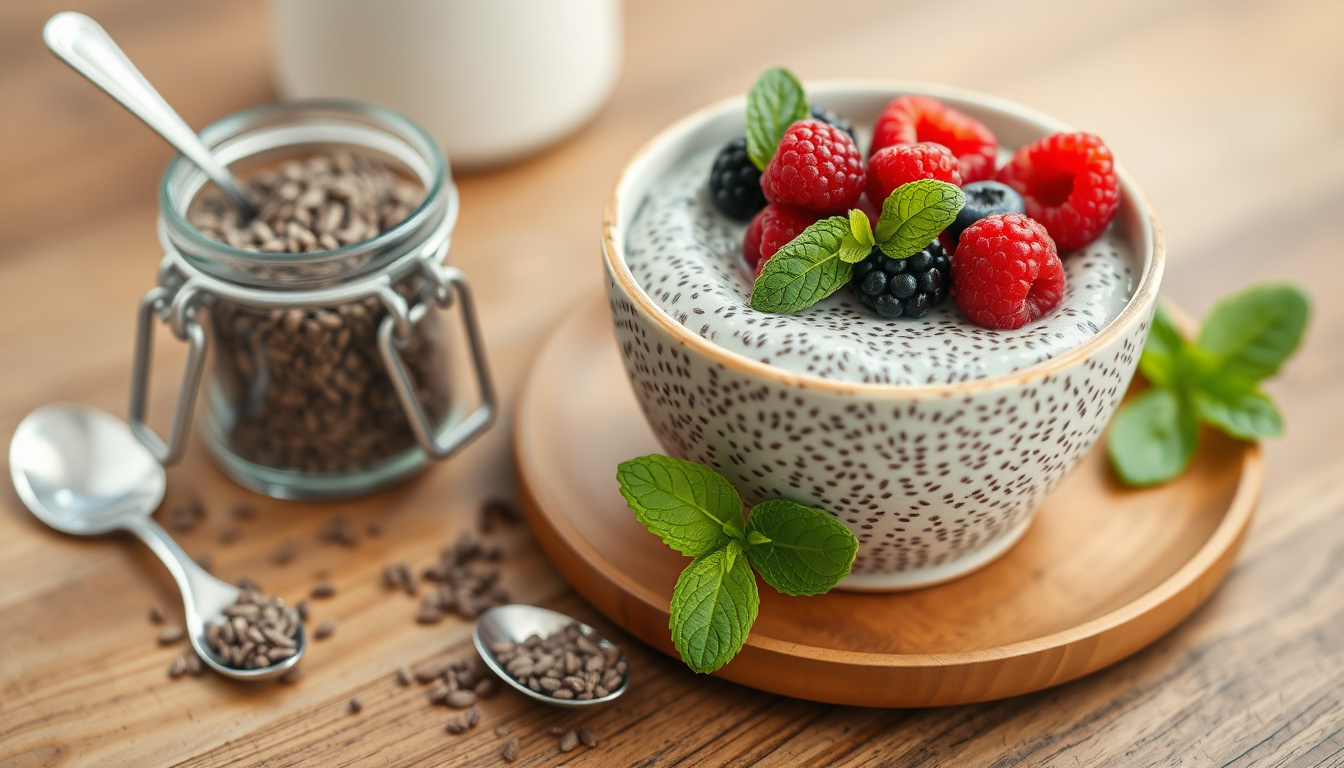
You’ve probably noticed tiny brown seeds popping up on café menus and health food shelves, but their journey into Chinese kitchens and medicine cabinets is less known. In Mandarin, they are called (qíyàzǐ), and these nutrient-packed seeds are carving out a surprising role in both modern nutrition and traditional remedies.
Chinese name (simplified): ·
Scientific name: Salvia hispanica ·
Omega-3 per ounce: ~5 g ·
Fiber per ounce: ~10 g ·
Origin: Central America (Aztec staple)
Quick snapshot
- Standard Chinese name: (qíyàzǐ) (Chinese Wikipedia)
- Rich in omega‑3 (ALA), fiber, and calcium (Harvard Health)
- High antioxidant content (quercetin) (WebMD)
- Direct efficacy for hyperpigmentation – only limited animal/in vitro studies (WebMD).
- Exact mechanism for fatty liver improvement in humans requires more trials (Harvard Health).
- Long‑term effects of high‑dose supplementation are not fully studied (WebMD).
- Chia seed consumption in China has risen sharply since 2015, driven by wellness trends. (Harvard Health)
- A 2021 review of 10 clinical trials found positive effects on HDL and LDL cholesterol (Harvard Health).
- Expect more Chinese‑language recipes and TCM integration.
- Watch for regulation updates as chia becomes more popular in China.
- How to incorporate into daily diet: pudding, congee, tea.
Seven nutritional facts at a glance: the most‑asked numbers about chia seeds.
| Attribute | Value |
|---|---|
| Chinese name (simplified) | |
| Pinyin | qíyàzǐ |
| Cantonese | kei4 aa3 zi2 |
| Scientific name | Salvia hispanica |
| Omega‑3 (ALA) per 28g | 4.9 g |
| Fiber per 28g | 9.8 g |
| Calcium per 28g | 179 mg |
What is chia seed called in Chinese?
Pronunciation in Mandarin (pinyin)
- Standard: (qíyàzǐ) – literally “strange Asian seed” in character breakdown.
- Alternative names: , (European sage seed) (English Wikipedia).
The Chinese character breakdown:
The first character (qí) means “strange” or “unusual,” (yà) means “Asia,” and (zǐ) means “seed.” Together they form a close phonetic and semantic approximation of “chia.” The Cantonese pronunciation, (kei4 aa3 zi2), uses the same characters with tone differences.
The implication: knowing both names helps you navigate labels across China and Hong Kong.
What are chia seeds benefits in Chinese?
Is chia seed good for fatty liver?
- Animal studies suggest chia seeds may reduce liver fat in non‑alcoholic fatty liver disease (NAFLD).
- Human trials are limited; a 2021 review highlighted improvements in HDL and LDL cholesterol, which are linked to liver health.
- The high fiber and omega‑3 content likely contribute to reduced inflammation and fat accumulation.
Do chia seeds help bone density?
- Chia seeds provide 179 mg calcium per 28‑g serving, plus phosphorus and magnesium.
- These minerals are essential for maintaining bone density, though chia alone cannot replace a balanced diet.
Can chia seeds help with hyperpigmentation?
- Antioxidants like quercetin and chlorogenic acid may reduce melanin production in laboratory studies.
- Human evidence is lacking—no clinical trials have confirmed a direct effect on skin pigmentation.
The same gel‑forming fiber that aids fullness can cause choking if seeds are swallowed dry. Always soak chia before eating, especially if you have swallowing difficulties.
The pattern: the strongest health claims are backed by clinical data on blood lipids and bone minerals, not by lab-only skin studies.
Why be careful with chia seeds?
Who must not eat chia seeds?
- People with dysphagia (difficulty swallowing) should avoid dry chia seeds.
- Those on blood‑thinning medications (e.g., warfarin) may need monitoring due to high omega‑3 content.
- Individuals with diabetes or hypertension should be cautious because chia can lower blood sugar and blood pressure.
- Anyone allergic to mint (Lamiaceae) family plants should avoid chia.
What is the biggest disadvantage of chia seeds?
- Overconsumption of fiber (more than 2–3 tbsp daily) can cause bloating, gas, and constipation.
- Dry chia seeds absorb moisture inside the throat and can block the airway—a rare but serious risk.
- Chia seeds may exacerbate inflammatory bowel conditions like Crohn’s disease in sensitive individuals.
The biggest trade‑off is simple: soak before use, start with 1 tbsp daily, and check with your doctor if you take medication for diabetes, hypertension, or blood clotting.
What this means: the risks are manageable if you follow basic preparation and dosage rules, but drug interactions require professional guidance.
How to eat chia seed in Chinese?
Traditional Chinese preparations (e.g., chia seed pudding)
- Basic pudding: 3 tbsp chia seeds + 1 cup liquid (coconut milk, oat milk, or water), refrigerate overnight.
- Sweeten with honey, rock sugar, or goji berries for a Chinese twist.
- Add to congee ( ) after soaking for a creamy texture.
Incorporating chia into Chinese soups and drinks
- Stir a soaked tablespoon into lukewarm green tea or red date tea.
- Add to chicken or lotus root soup for extra fiber (stir well after cooking).
- Mix into fruit water with cucumber, mint, and lemon.
Daily recommended serving size
- 15–20 g (about 1 tbsp) per day is a safe starting point.
- Increase gradually to 2 tbsp if no digestive discomfort occurs.
- Always consume seeds after soaking for at least 15–20 minutes.
The catch: soaking is non‑negotiable for safety, and the 1‑tbsp start allows your gut to adjust.
What is the role of chia seeds in Chinese Medicine?
Historical use in Traditional Chinese Medicine (TCM)
- Chia seeds are not native to Chinese materia medica; they appeared only after modern imports from the Americas.
- Today, some TCM practitioners classify them as cooling and moisturizing.
- They are sometimes prescribed for dryness, constipation, and “yin deficiency” symptoms.
Chia seeds vs. other TCM seeds (e.g., flax, black sesame)
- Flax seed ( yàmázǐ) has a longer history in TCM, used for constipation and heart health.
- Black sesame ( hēizhīma) is considered warming and is used for hair and bone health.
- Chia is viewed as a neutral to cooling alternative, often substituted for flax in modern TCM recipes.
For Chinese consumers who treat food as medicine, chia seeds fill a gap: a cooling, moisturizing seed that complements the existing pantry of flax and sesame. But because it’s a newcomer, TCM advice remains anecdotal rather than codified.
The implication: chia’s role in TCM is still evolving, so rely on Western data for dosing and safety.
Upsides
- High nutrient density (omega‑3, fiber, calcium, antioxidants) (Harvard Health)
- Versatile in Chinese cooking (pudding, congee, tea)
- May improve heart health markers (HDL, LDL) (Harvard Health)
- Supports bone density with calcium and phosphorus (WebMD)
Downsides
- Choking risk if eaten dry (Harvard Health)
- May interact with blood‑thinning and diabetes medications (WebMD)
- Digestive discomfort if overconsumed (fiber overload) (WebMD)
- Not suitable for people with dysphagia or mint allergies (WebMD)
How to eat chia seeds safely and deliciously
- Choose your liquid – water, milk, coconut milk, or Chinese tea. Use 3–4 times the volume of seeds.
- Measure 1 tbsp (about 15 g) per serving (WebMD).
- Stir thoroughly to prevent clumps, then refrigerate for 15–30 minutes (or overnight for pudding).
- Add flavor – rock sugar, honey, goji berries, or a squeeze of lemon.
- Start small – 1 tbsp daily for the first week, then increase if tolerated.
- Never eat dry – always soak to avoid choking (Harvard Health).
Following these steps minimizes risk and maximizes the culinary and nutritional benefits.
( :chia seed), , 。
Chia seeds can cause choking, interact with blood thinners, and trigger allergies.
– WebMD (health publisher)
Chia seeds can help reduce liver fat and improve bone density.
– Harvard Health (academic medical publisher)
For anyone adding chia to their diet, the trade‑off is clear: you get impressive nutrition density, but only if you prepare them correctly and respect your own health conditions. In China, as chia becomes a staple in health‑conscious households, the winners will be those who combine Western hard data with traditional Chinese eating wisdom.
medicalnewstoday.com, healthline.com, mayoclinichealthsystem.org, youtube.com
Frequently asked questions
How many chia seeds should I eat per day?
Start with 1 tbsp (15–20 g) daily, soaked. Increase to 2 tbsp if tolerated well (WebMD).
What is the best way to eat chia seeds for weight loss?
Soaking them creates a gel that promotes fullness. Add to water, tea, or congee about 30 minutes before meals.
Are chia seeds safe during pregnancy?
Yes, in moderate amounts (1 tbsp soaked). They provide folate, calcium, and omega‑3. Consult your doctor if on any medication (Harvard Health).
Do chia seeds need to be ground before eating?
No – whole seeds are fine if soaked. Grinding does improve nutrient absorption, but it’s not necessary for most people.
Can I add chia seeds to Chinese tea?
Yes – stir a soaked tablespoon into luke‑warm green tea, red date tea, or jasmine tea. Avoid boiling water to preserve the gel texture.
Where can I buy chia seeds in China?
Available in major cities at international supermarkets (e.g., Carrefour, Walmart), health food stores, and online platforms like Taobao and JD.com.
What is the difference between chia seeds and flax seeds in Chinese cuisine?
Flax seeds ( ) have a nuttier taste and are often ground for porridge. Chia seeds ( ) form a gel and work better in cold drinks and puddings. Both are used in modern Chinese health cooking.