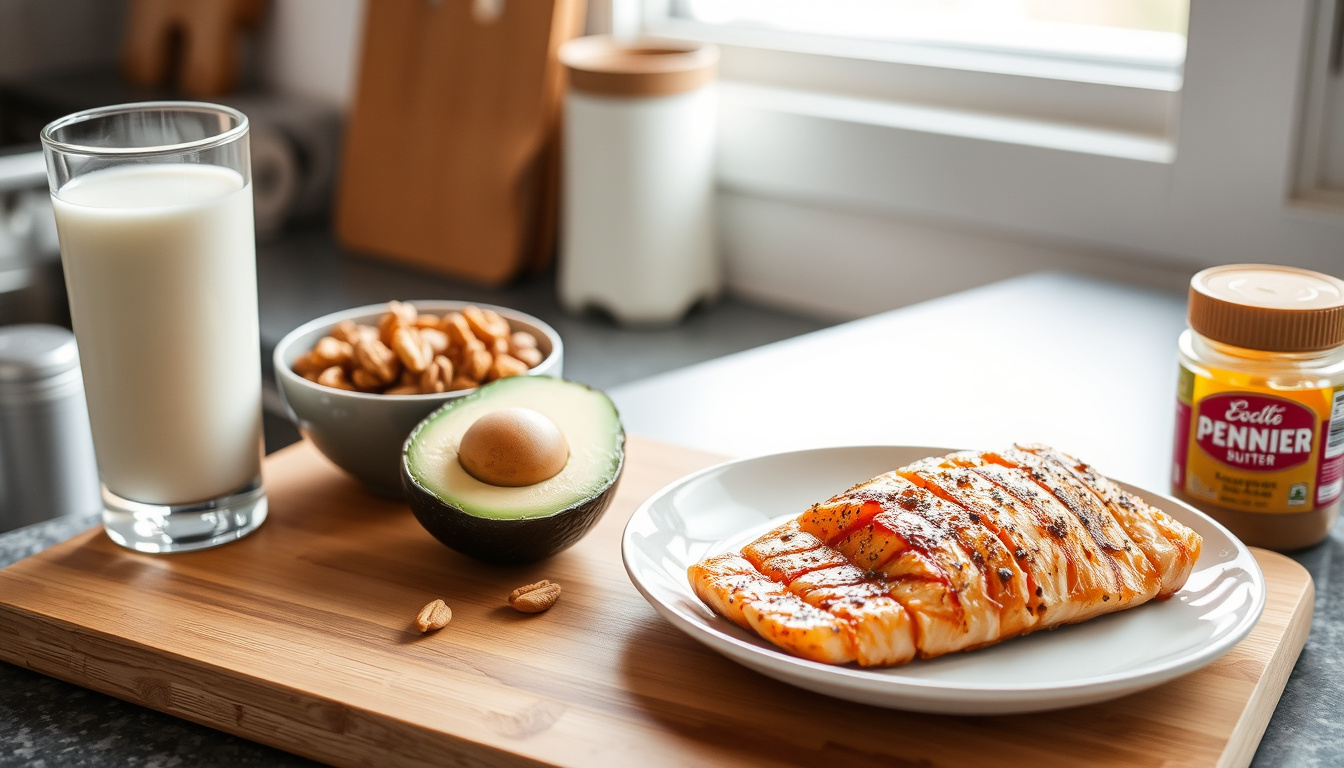
Anyone who’s tried to gain weight knows it can feel as challenging as losing it—especially if you’re naturally thin with a fast metabolism. The key lies in a steady calorie surplus of 300 to 500 extra calories per day, paired with nutrient-dense foods and strength training, as recommended by the NHS (UK’s national health authority).
Healthy weight gain rate per week: 0.5–1 kg (1–2 lbs) ·
Extra daily calories recommended: 300–500 from nutrient-dense foods ·
Top high-calorie food (per 100g): Nuts: ~600 kcal ·
Minimum protein intake for muscle gain: 1.6–2.2 g per kg of body weight ·
Common timeframe questions from users: 7 days, 1 month, 2 kg in 1 week
Quick snapshot
- A calorie surplus of 300–500 per day leads to steady weight gain (NHS, Academy of Nutrition and Dietetics).
- Healthy weight gain is 0.5–1 kg per week (NHS).
- Strength training combined with adequate protein promotes muscle gain (Healthline).
- Optimal protein intake varies based on individual muscle mass and activity level (Healthline).
- Genetic factors influence metabolism and weight gain ease. (Healthline)
- Best carb:protein:fat ratio for weight gain lacks strong consensus. (Healthline)
- Week 1–2: Start with 300 extra calories daily; monitor weight weekly.
- Month 1: Aim for 2–4 kg gain; incorporate strength training 3x/week.
- Month 2–3: Increase to 500 surplus if needed; focus on progressive overload.
- Reassess calorie surplus every 2 weeks if no gain.
- Track body composition (not just weight) to ensure muscle gain.
- Adjust protein intake upward when increasing training intensity.
The table below summarizes the core metrics for healthy weight gain, drawn from authoritative health bodies.
| Metric | Value |
|---|---|
| Healthy rate per week | 0.5–1 kg (1–2 lbs) |
| Daily calorie surplus | 300–500 kcal |
| Recommended protein intake | 1.6–2.2 g per kg of body weight |
| Top calorie-dense drink | Whole milk: ~150 kcal per cup |
What is the fastest way to gain weight?
Calorie surplus basics
The core mechanic is eating more calories than you burn. The NHS (UK national health service) advises a moderate surplus of 300–500 extra calories per day for gradual weight gain. That translates to roughly one large snack or an extra meal.
Nutrient-dense vs empty calories
- Whole foods deliver vitamins, minerals, and fiber alongside calories. Healthline’s 3,000-calorie sample plan uses oats, peanut butter, avocado, chicken, and steak rather than processed snacks.
- Empty-calorie foods (soda, candy) add fat without nutritional benefit. The Academy of Nutrition and Dietetics (professional dietitian organization) stresses choosing nutrient-dense foods.
Role of strength training
Resistance training signals your body to build muscle, not just store fat. The Healthline plan pairs calorie surplus with compound exercises like squats and bench presses. Without it, most of the extra weight will be fat.
The implication: a calorie surplus alone isn’t enough—you need a stimulus for muscle growth to turn those extra calories into lean mass.
How does a skinny person gain weight?
Understanding high metabolism
Many naturally thin people have a higher basal metabolic rate. Mount Sinai (New York hospital system) recommends eating 5–6 small meals per day to overcome a fast metabolism and increase total calorie intake.
Frequent meals and calorie density
- Small, frequent meals prevent feeling overly full. Mount Sinai advises drinking liquids between meals, not with them, to leave room for high-calorie foods.
- Calorie-dense options: nuts (~600 kcal per 100g, per Bony to Beastly), avocados (~160 kcal per half), and full-fat dairy.
Combining diet with resistance exercise
Resistance training triggers muscle hypertrophy. The Healthline guide includes a strength routine alongside the diet. Without exercise, a skinny person may struggle to add weight that looks healthy rather than just soft.
Why this matters: the same surplus that builds muscle with training will store as fat without it. Choose activity to shape how the weight goes on.
How can I gain weight in 7 days naturally?
Realistic expectations for short-term gain
Gaining more than 1 kg per week is mostly water and fat, not sustainable. The NHS recommends 0.5–1 kg per week as a healthy range. A 7-day push might show 0.5–1 kg if you stick to a 500-calorie daily surplus.
High-calorie foods suitable for rapid increase
- Peanut butter, whole milk, dried fruit, and smoothies boost calories quickly. Berry Street’s 5-day weight-gain plan uses eggs, whole milk, avocado, Greek yogurt, nuts, sweet potatoes, and almond butter.
- A cup of whole milk adds ~150 kcal (UCSF Health (University of California medical center) uses milk in its high-calorie menu).
Hydration and liquid calories
Drink calorie-rich beverages like full-fat milk or homemade shakes between meals. Mount Sinai suggests drinking liquids between meals to avoid reducing appetite for solid food.
The catch: short-term gains are mostly water weight. Real muscle gain takes weeks, not days.
What to drink for weight gain?
Milk and milkshakes
Whole milk provides protein, fat, and calcium. A cup contains about 150 kcal. UCSF Health’s sample menu includes cereal with whole milk for breakfast and milk-based shakes.
Protein smoothies
Homemade smoothies with banana, oats, peanut butter, and milk can exceed 500 kcal. Healthline’s 3,000-calorie day features a post-workout shake with milk, protein powder, and nut butter.
Nourishing soups with added cream
Adding cream, cheese, or powdered milk to soups and mashed potatoes increases calorie content without making portions larger. UCSF Health adds cream to soups; the Academy of Nutrition and Dietetics recommends adding milk powder to mashed potatoes.
The trade-off: liquid calories are easy to digest but can displace solid food. Use them as supplements, not replacements, for meals.
What are the top 10 foods to gain weight?
- Nuts and nut butters – ~600 kcal per 100g, rich in healthy fats and protein (Bony to Beastly).
- Red meats and poultry – high-quality protein and iron for muscle growth.
- Fatty fish – salmon, mackerel provide protein and omega-3s.
- Whole grains – oats, brown rice, quinoa supply starchy carbohydrates. Bony to Beastly notes that whole grains support workout performance via muscle glycogen.
- Avocados – ~160 kcal per half, heart-healthy fats.
- Dried fruit – concentrated calories and fiber.
- Full-fat dairy – whole milk, yogurt, cheese add protein and fat.
- Potatoes and starches – potatoes, sweet potatoes, corn.
- Eggs – versatile, protein-rich (~70 kcal each).
- Dark chocolate – ~550 kcal per 100g, antioxidants.
These foods appear consistently across sources: Berry Street, Healthline, and UCSF Health all recommend similar lists.
What this means: you don’t need exotic supplements. The most effective weight-gain foods are everyday staples from the supermarket.
Step-by-Step Strategy to Gain Weight Healthily
-
Step 1: Set your calorie target
Calculate your maintenance calories using a TDEE calculator, then add 300–500 kcal. The NHS recommends this range for gradual gain. Track with an app like MyFitnessPal for the first two weeks to verify you’re hitting the surplus.
-
Step 2: Eat 5–6 meals per day
Mount Sinai advises small frequent meals to increase total calorie intake without feeling stuffed. Each meal should contain a protein source, a carbohydrate source, and a fat source.
-
Step 3: Include a high-calorie drink between meals
Drink whole milk, a fruit smoothie with peanut butter, or a protein shake between meals. UCSF Health uses milk-based shakes to add 400–600 calories per serving.
-
Step 4: Prioritize protein at every meal
Aim for 1.6–2.2 g of protein per kg of body weight per day. That means a 70 kg person needs 112–154 g of protein daily. Good sources: chicken, eggs, Greek yogurt, tofu, fish. Healthline’s plan distributes protein across all meals.
-
Step 5: Add strength training 3–4 times per week
Focus on compound lifts: squats, deadlifts, bench press, rows. The Healthline guide pairs the diet with a progressive overload routine. Start with 3 sets of 8–12 reps and increase weight gradually.
-
Step 6: Track progress and adjust
Weigh yourself weekly at the same time of day. If no gain after two weeks, add another 200–300 calories daily. If gaining more than 1 kg per week, scale back to avoid excess fat. The Academy of Nutrition and Dietetics emphasizes slow, steady progress.
Why this matters: a structured plan removes guesswork. Each step builds on the last, turning theory into a repeatable routine.
Clarity: What’s Confirmed and What’s Unclear
Confirmed facts
- A calorie surplus of 300–500 per day leads to steady weight gain (NHS, Academy of Nutrition and Dietetics).
- Healthy weight gain is 0.5–1 kg per week (NHS).
- Strength training combined with adequate protein promotes muscle gain (Healthline).
What’s unclear
- Optimal protein intake may vary based on individual muscle mass and activity level.
- Genetic factors can significantly influence metabolism and weight gain ease.
- The best ratio of carbs:protein:fat for weight gain lacks strong consensus.
“Gain weight gradually by adding healthy calories – adults could try adding around 300 to 500 extra calories a day.”
— NHS (UK national health service)
“Gaining weight should be done slowly, by adding snacks and meals and choosing nutrient-dense foods.”
— Academy of Nutrition and Dietetics (professional dietitian organization)
“Add cream or full-fat milk to foods like mashed potato or soups.”
For naturally thin individuals, the path to healthy weight gain is clear: commit to a consistent calorie surplus from whole foods, pair it with resistance training, and track progress weekly. The alternative—relying on junk food or skipping exercise—leads to fat gain and health risks. For anyone aiming to add lean mass, the decision is straightforward: start with 300 extra calories today, or stay where you are.
Related reading: How to Gain Weight Healthfully
Frequently asked questions
Should I eat before or after a workout to gain weight?
Both. Eat a small meal with carbs and protein 1–2 hours before training for energy, and a protein-rich meal or shake within 2 hours after to support muscle repair (Healthline).
Can I gain weight without eating meat?
Yes. Plant-based sources like lentils, beans, tofu, nuts, and quinoa provide protein and calories. The Academy of Nutrition and Dietetics recommends combining whole grains with legumes to form complete proteins.
Is it better to eat more meals or larger meals for weight gain?
Both strategies work, but small frequent meals (5–6 per day) are often easier for people who feel full quickly. Mount Sinai recommends this approach for higher total intake.
What role does sleep play in weight gain?
Poor sleep can increase cortisol and reduce appetite, making it harder to maintain a calorie surplus. Adequate sleep (7–9 hours) supports muscle recovery and hormone balance (NHS).
How do I know if I am gaining muscle vs fat?
Track both weight and waist circumference or body fat percentage. If your weight goes up but your waist stays the same, you’re likely gaining muscle. Strength gains in the gym are another positive signal.
Can supplements like mass gainers help with weight gain?
Mass gainers can provide extra calories, but whole foods are preferred for micronutrients. Healthline notes that a homemade smoothie can match the calories of a mass gainer without the added sugars.
How long does it take to see noticeable weight gain from a new diet?
Most people see a change on the scale within 2–3 weeks if they maintain a 300–500 calorie surplus. Visible muscle changes take 4–8 weeks with consistent training (Academy of Nutrition and Dietetics).