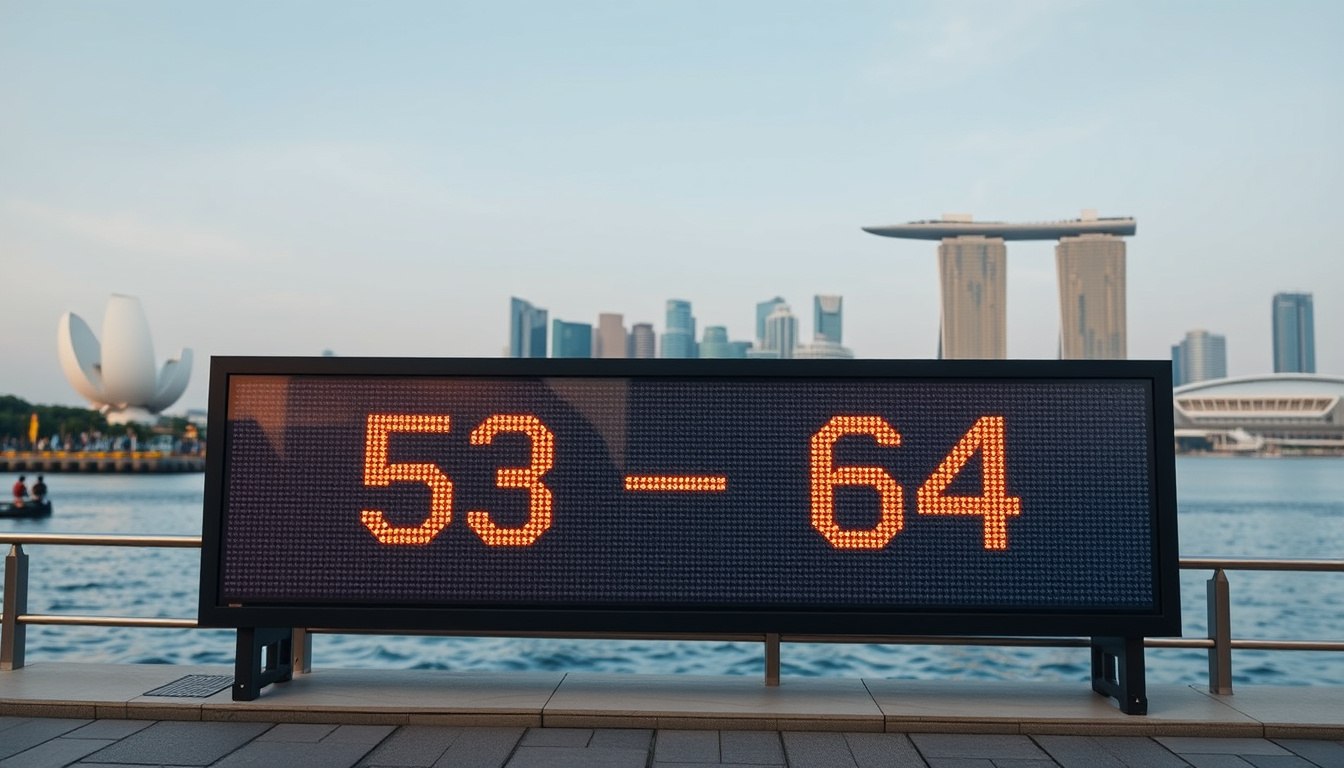
If you’ve ever wondered when you can finally stop working in Singapore, the answer keeps shifting — and that’s by design. Singapore’s retirement age is rising in steady steps, with the next bump coming on 1 July 2026 when it moves from 63 to 64.
Current minimum retirement age: 63 (until 30 June 2026) ·
Current re-employment age: 68 (until 30 June 2026) ·
Retirement age from 1 July 2026: 64 ·
Re-employment age from 1 July 2026: 69 ·
Target retirement age by 2030: 65 ·
Target re-employment age by 2030: 70
Quick snapshot
- Retirement age is 63 until 30 June 2026 (Ministry of Manpower (Singapore government))
- Re-employment age is 68 until 30 June 2026 (Ministry of Manpower (Singapore government))
- CPF payout eligibility age remains 65 (CPF Board (Singapore’s pension authority))
- Whether further increases beyond 2030 will be announced
- How economic conditions might affect the planned timeline
- 1 July 2026: retirement age rises to 64, re-employment age rises to 69 (Ministry of Manpower (Singapore government))
- 2030: target retirement age 65, re-employment age 70 (The Straits Times (Singapore news outlet))
- Employers must prepare for higher re-employment obligations from July 2026
- Workers approaching 63 in 2026 will start seeing the 64 retirement age apply to them
Singapore’s retirement age framework has shifted substantially in the past few years. Here’s a snapshot of the key figures.
| Measure | Current value | From 1 July 2026 | 2030 target |
|---|---|---|---|
| Minimum retirement age | 63 | 64 | 65 |
| Re-employment age | 68 | 69 | 70 |
| Who it applies to | Citizens & PRs | Citizens & PRs | Citizens & PRs |
| CPF payout eligibility age | 65 | 65 (unchanged) | 65 (unchanged) |
| Governing law | Retirement and Re-employment Act (RRA) | Retirement and Re-employment Act (RRA) | Retirement and Re-employment Act (RRA) |
What is the retirement age in Singapore?
As of today, the minimum retirement age in Singapore is 63 for Singapore citizens and Permanent Residents. This is set by the Retirement and Re-employment Act (RRA), which the Ministry of Manpower (Singapore’s labour regulator) enforces. Companies cannot ask workers to retire before this age.
But the number is changing soon. On 1 July 2026, the retirement age rises to 64, and it applies to anyone born on or after 1 July 1963.
Singaporeans born from mid-1963 onward will work one extra year before hitting the statutory retirement age — a deliberate shift to keep more people in the workforce as the population ages.
What is the retirement age for foreigners in Singapore?
Foreigners who are not Permanent Residents are not covered by the RRA’s retirement age. Their ability to keep working depends on work-pass renewal and Ministry of Manpower (Singapore’s labour regulator) criteria, not the statutory retirement age. Foreign employees on Employment Pass, S Pass, or Work Permit are also exempt from CPF contributions, as noted by QuickHR (Singapore HR compliance platform).
What is the history of retirement age in Singapore?
Singapore has been raising its retirement age gradually. The most recent increase before the current one was on 1 July 2022, when the retirement age moved to 63 and the re-employment age to 68. The next step in the phased plan is the 1 July 2026 increase to 64/69, with a long-term target of 65/70 by 2030, as reported by The Straits Times (Singapore’s leading newspaper).
The pattern: Singapore is gradually shifting the retirement age upward to address an aging population and labour shortages, rather than making one sharp jump.
Can I work after 70 in Singapore?
Yes — there is no statutory maximum working age in Singapore. Employers cannot force retirement before the minimum retirement age, and after that, working is a matter of agreement between employer and employee.
The re-employment framework provides a safety net: eligible employees must be offered re-employment up to the prescribed re-employment age (currently 68, rising to 69 in 2026), as confirmed by Channel NewsAsia (Singapore news broadcaster).
What is the age limit to work in Singapore?
There is no hard age limit. After age 63 (the minimum retirement age), you can continue working if your employer agrees. The re-employment age (68, soon 69) is the age up to which employers must offer re-employment, not a cap.
For foreign workers, work passes have their own age limits. The Ministry of Manpower (Singapore’s labour regulator) sets rules for each pass type, and renewal is not guaranteed beyond certain ages.
What is the re-employment age in Singapore?
The current re-employment age is 68, rising to 69 from 1 July 2026. Employers are required to offer re-employment to employees who turn 63 and meet eligibility criteria. If an employer cannot offer re-employment, they must provide an employment assistance payment instead.
The catch: re-employment is not automatic. Employees must meet company performance and health standards.
The re-employment age is the actual safety net — it’s the age up to which you have a legal right to keep working. For someone turning 63 in 2026, that right extends to 69, five years longer than the statutory retirement age.
What if you retired at 60, instead of 65, in Singapore?
Retiring at 60 is entirely legal — the statutory retirement age is a floor, not a requirement. But retiring five years early has real financial consequences, especially for your CPF savings.
What are the financial implications of early retirement?
If you retire at 60, you stop earning CPF contributions from your employer. That means less money in your Ordinary Account, Special Account, and MediSave Account — and lower retirement payouts later.
How does early retirement affect CPF payouts?
The CPF payout eligibility age is 65, regardless of when you retire. The CPF Board (Singapore’s pension authority) makes clear that the retirement age and the payout eligibility age are separate and not linked. You can start CPF payouts as early as 65, or defer them for higher monthly amounts.
If you stop working at 60 and start CPF payouts at 65, you have a five-year gap with no salary and no CPF contributions — a period you’d need to fund from savings or other income.
Early retirement gives you five more free years, but each year you delay CPF payouts boosts your monthly payout by roughly 6-7%. For someone who retires at 60 and starts payouts at 70, the monthly sum could be nearly double what it would be at 65.
Does Singapore have an old age pension?
Singapore does not have a traditional government-funded pension system where the state pays retirees a monthly stipend from tax revenue. Instead, it uses the Central Provident Fund (CPF), a mandatory savings scheme.
What is the pension system in Singapore?
The CPF is a defined-contribution system: workers and employers contribute a percentage of wages into individual accounts. These funds can be withdrawn as retirement payouts starting at age 65. For low-income seniors, the Silver Support Scheme provides additional top-ups, as explained by CPF Board (Singapore’s pension authority).
How does CPF work as a retirement savings scheme?
Your CPF savings sit in three accounts: Ordinary (housing, investment), Special (retirement), and MediSave (healthcare). At 65, you can start receiving monthly payouts from your Retirement Account, which pools savings from the Special and Ordinary accounts.
The CPF Board (Singapore’s pension authority) emphasises that the retirement-age increase to 64 does not change the CPF payout eligibility age, which remains at 65. The two systems operate independently.
Singapore raises the retirement age to keep people working longer, but its pension system — the CPF — doesn’t follow the same timeline. You can work until 64 but still can’t access CPF payouts until 65. The one-year gap is by design, not an oversight.
What is the re-employment age in Singapore?
We’ve touched on this above, but the re-employment age deserves its own section because for many workers, it’s more relevant than the retirement age.
The current re-employment age is 68, rising to 69 from 1 July 2026. The long-term target is 70 by 2030.
What is the re-employment age for foreigners?
For foreign workers on work passes, re-employment rights under the RRA do not apply. Their continued employment depends on work-pass renewal and Ministry of Manpower (Singapore’s labour regulator) criteria. As QuickHR (Singapore HR compliance platform) notes, foreigners without PR status are exempt from CPF contributions and the RRA’s protections.
What are the employer’s obligations under the RRA?
Under the RRA, employers must:
- Offer re-employment to eligible employees who turn the minimum retirement age
- Continue re-employment until the prescribed re-employment age
- If re-employment is not possible, provide an employment assistance payment
This framework means employees have a legal right to keep working from the retirement age to the re-employment age, provided they meet performance and health criteria.
Timeline of Singapore retirement age changes
- 1 July 2022: Retirement age raised to 63, re-employment age raised to 68
- 1 July 2026: Retirement age raised to 64, re-employment age raised to 69
- 2030 (target): Retirement age 65, re-employment age 70
Each increase applies from 1 July, not the calendar year start. The 2026 change applies to those born on or after 1 July 1963.
Confirmed facts
- Retirement age will be 64 from 1 July 2026
- Re-employment age will be 69 from 1 July 2026
- Targets for 2030 are 65 and 70
- CPF payout eligibility age remains 65, independent of retirement age
- Employers cannot force retirement before the statutory minimum
What’s unclear
- Whether the government will announce further increases beyond 2030
- How future economic conditions might affect the planned timeline
- Whether the 2030 targets will be met as scheduled
thekopinotes.com, straitstimes.com, clydeco.com, thekopinotes.com, sso.agc.gov.sg, quickhr.co, accounts-os.com, sg.news.yahoo.com
Frequently asked questions
Is the retirement age the same for all nationalities?
No. The statutory retirement age under the RRA applies to Singapore citizens and Permanent Residents. Foreigners on work passes are not covered by the RRA’s retirement age and are subject to work-pass renewal rules.
When does the retirement age increase take effect?
The next increase takes effect on 1 July 2026, when the retirement age rises from 63 to 64. The re-employment age also rises from 68 to 69 on the same date.
What happens if my employer does not offer re-employment?
If an eligible employee is not offered re-employment, the employer must provide an employment assistance payment as required by the RRA. Employees can also file a claim with the Ministry of Manpower.
Can I withdraw my CPF savings before retirement age?
You can withdraw CPF savings from age 65 under the Retirement Sum Scheme or CPF LIFE. Withdrawals before 65 are generally not allowed except for specific purposes like housing or medical needs.
What is the retirement age in Singapore in 2025?
In 2025, the retirement age remains 63 and the re-employment age remains 68. The next increase is on 1 July 2026.
How does the retirement age affect my CPF payouts?
The retirement age and CPF payout eligibility age are separate. Raising the retirement age does not change when you can start CPF payouts. The CPF payout eligibility age remains 65.
What is the difference between retirement age and re-employment age?
The retirement age is the minimum age at which employers can ask you to retire. The re-employment age is the age up to which employers must offer you continued employment if you want it. The re-employment age is higher than the retirement age.
Related reading
- Tan See Leng Cantonese: The Viral Parliament Quote Explained
- Red Dot United Manifesto GE2025: Citizens’ Dividend
For Singaporeans approaching their 60s, the message is straightforward: the retirement age is rising, but it’s only one part of a larger picture. The re-employment age offers more working years, and the CPF system remains independent of either number. The choice to retire early, at the statutory age, or later depends on individual financial readiness — but the legal framework is increasingly designed to keep people working longer. For anyone planning retirement in Singapore, the implication is clear: plan for a longer working life and a CPF payout schedule that starts at 65 regardless of when you stop working.